Turin, 17-19 September 2026
The Summer School explores the debates and policies that gave rise to political economy as a field of inquiry. Rather than treating it as a precursor to modern economics, participants will examine
political economy as a historically situated set of practices and arguments, embedded in specific institutional, imperial, and ecological contexts.
These took related yet disparate forms, ranging from the much-maligned shorthand of “mercantilism” to self-conscious traditions such as Cameralism, Colbertism, Physiocracy, and economia civile. Bringing together approaches from intellectual history, economic history, and the history of science, the Summer School will focus on three interconnected axes: 1. Subsistence, Sociability, and the Problem of Order. How did early modern societies confront the tensions between scarcity, market dependence, and political stability? In what ways did concerns over provisioning, luxury, and commercial competition shape understandings of social order? 2. Production, Power, and the Uneven Wealth of Nations. Why did some nations prosper while others lagged behind? How did contemporaries understand the relationship between production, trade, and state power in a competitive international order? 3. Rights, Justice, and the Legitimacy of Economic Life. How were inequality, property, and market outcomes justified or contested within emerging frameworks of rights and justice? What moral limits were placed on economic activity, and by whom?
SCIENTIFIC COORDINATION: Sophus Reinert

SPEAKERS
JUNIOR FELLOWS
PARTICIPANTS

Anil Atilgan recently completed an MA in Historical Studies at Central European University in Vienna. His research interests include the intellectual history of political economy, Enlightenment thought, history of environmental ideas, and history of science. His master’s thesis examined the grain trade debate in eighteenth-century Britain and France, focusing on competing understandings of scarcity, nature, agricultural improvement, and the limits of economic growth. His current research explores the institutional and administrative settings in which political-economic knowledge was produced, particularly in relation to agriculture and the management of natural resources.
THP Summer School presentation | Revisiting the Grain Trade Debate: Nature, Scarcity, and the Limits of Improvement, 1763-1776
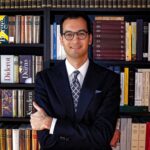
Auguste Bertholet is a Swiss historian specializing in the intellectual, political, and economic history of eighteenth-century Switzerland and the European Enlightenment. He completed his doctoral research at the University of Lausanne, where he studied economic and political reform thought in the Pays de Vaud during the eighteenth century. Together with Béla Kapossy, he co-edited La physiocratie et la Suisse. Études sur la correspondance du marquis de Mirabeau et Marc Charles Frédéric de Sacconay (1731-1787) (Slatkine, 2023). He currently works as a historian for the watch company Patek Philippe.
THP Summer School presentation | Moral Reform and Political Economy in Eighteenth-Century Switzerland: The Société morale de Lausanne and Republican Stability

Carlotta Denkmann is a first year PhD Candidate in the History of Political Thought at the University of Cambridge, at which she previously completed the MPhil in Political Thought and Intellectual History. Her doctoral research explores the 18th century debate on the concept of self-deception as both a threat to self-knowledge and morality as well as a driving force of human sociability and personal happiness. Her doctoral research is supervised by Professor Richard Bourke and co-funded by the Open-Oxford-Cambridge Arts and Humanities Research Council Doctoral Training Partnership and Peterhouse.
THP Summer School presentation | Self-Deception and Delusion in the Political Economy of Adam Smith
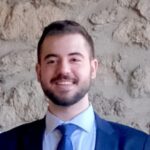
Jaime Harguindey García is an FPI UAM predoctoral research fellow in the Departamento de Historia Moderna at the Universidad Autónoma de Madrid. He earned his master’s degree in early modern history from the Universidad de Cantabria, the Universidad de Santiago de Compostela and the Universidad Autónoma de Madrid, including an external academic placement at the Instituto de Historia of the Consejo Superior de Investigaciones Científicas. He graduated in History from the Universidad de Alcalá with two excellence scholarships, a departmental collaboration grant and external academic training at the Archivo de la Biblioteca Nacional de España. His doctoral research, under the supervision of Antonio Álvarez Ossorio Alvariño and Roberto Quirós Rosado, examines the political adaptation, economic projects and transnational relations of the Spanish aristocracy during the dynastic transition from the Habsburgs to the Bourbons through the XI Duke of Béjar (1680-1747). Within the framework of the THP, he will analyse the moral and material foundations of the political economy pursued by this entrepreneurial nobleman through its practical application to a specific case, the linen.
THP Summer School presentation | Entrepreneurial nobility and rural manufacturing in eighteenth-century Spain: the lordship linen factory of the 11th Duke of Béjar
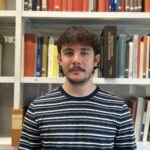 William James Hopkinson studied for his bachelor’s degree at the University of Southampton in History (2016-2019). From there he developed an interest in the classical world, particularly in ancient Rome. He then completed a master’s degree in Ancient History at King’s College London (2020-2021) where he specialised in the political thought of the late Roman Republic. He also developed an interest in classical reception, especially in the Italian Renaissance. This led him to completing a second master’s degree in Cultural, Intellectual and Visual History of the Renaissance at the Warburg Institute in London (2022-2023) where he focused largely on the moral and political thought of the Italian Renaissance in the sixteenth and seventeenth centuries. He stayed on at the Warburg Institute for his PhD. He is currently in the second year of his PhD, researching for a thesis entitled Aristotle and Italian Renaissance Utopianism: Virtue and the City 1526-1627 under the supervision of Professor Jill Kraye where he explores the reception of Aristotle’s ethical and political doctrines in Italian Renaissance utopian thought in the sixteenth and seventeenth centuries.
THP Summer School presentation | Aristotle and Italian Renaissance Utopianism: Virtue and the City 1526-1627
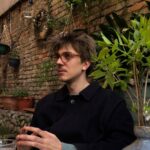
Jonathan Lohmann is currently completing his master’s degree in philosophy at the Freie Universität Berlin, where he also earned his BA in philosophy and political science. He has co-taught a seminar with Prof. Anne Eusterschulte on Meister Eckhart and published an article on early speculations regarding the epistemological capabilities of the microscope. His research interests lie in the multifaceted relationship between philosophy, theology, and the history of science, spanning from the Middle Ages to the end of the early modern period, with a particular focus on shifts in societies’ relations to the world and to themselves. At the THP Summer School, he will present his project of reconstructing the emergence of economic theory from the reception of Saint Augustine in seventeenth- and eighteenth-century France.
THP Summer School presentation | The Birth of Economics out of the Spirit of Saint Augustin
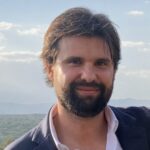
Marek Maj researches the history of economic thought in Central and Eastern Europe. His doctoral dissertation at the European University Institute (EUI) in Florence concerns the diffusion of political-economic concepts in Kraków between 1780 and 1848. Combining contextual reading with digital history methods, it asks how a learned vocabulary of natural jurisprudence and political economy became a resource that a broad public could turn to its own ends. Marek has been a convenor of the EUI Economic History and Ideas Working Group, and his work was published as part of the JHI Blog’s ‘The Return of Political Economy in Intellectual History’ forum. He holds degrees from UCL and Birkbeck, University of London.
THP Summer School presentation | Polish Physiocracy and Peasant Petitioning, Kraków c. 1816
THP Summer School presentation | Needs, Rights, and the Wealth of States: Political Economy, Commerce, and Social Welfare in the Sokoto Caliphate, 1804–1848

Nicholas P. J. McKenna is a Ph.D. candidate at Johns Hopkins University whose research examines how American colonists developed revolutionary political thought through engagement with conflicts across different imperial spaces between 1763 and 1775. Building on his MA thesis and first-year PhD research, his work analyzes how events within the British Empire, along its borderlands, and beyond imperial boundaries circulated through colonial print culture and shaped debates about liberty, tyranny, and imperial authority. By tracing transimperial news flows and comparative political reasoning, his research intervenes in the historiography by shifting attention away from how the American Revolution influenced the world and toward how global events and imperial crises helped form revolutionary thought before independence.
THP Summer School presentation | Before the Shot: Thoughts on the Global Origins of the American Revolution
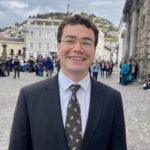 Mateo Mauricio Montoya is a historian of knowledge and the early modern world. He holds a Ph.D. in the History of Science from Harvard University and a B.A. in Rhetoric from the University of California, Berkeley. His work moves across the history of political economy, religion and empire, the history of quantification and administration, and the intellectual and material cultures of the early modern Iberian Atlantic. He is currently interested in how practices of governance, knowledge, and welfare circulated between Europe and its colonial peripheries, and in how those exchanges reshaped global debates about the good life, public happiness, and the wealth of nations. His ongoing book project develops these questions through the history of the Jesuit-Guaraní missions in colonial Paraguay and their long afterlife in eighteenth-century European political thought.
THP Summer School presentation | Zones of Exception: The Society of Jesus, the Chartered Companies, and the Plural Sovereignties of Eighteenth-Century Political Economy
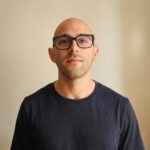
Mattia Steardo is an Alexander von Humboldt Postdoctoral Fellow at Leibniz University Hannover, Germany. He received his PhD in Global History of Empires from the University of Turin in 2024 and was subsequently a Fellow at the Fondazione Luigi Einaudi (Turin) in 2024-25. His academic experience includes teaching as an assistant professor at the University of Turin (2024-25), serving as a contract lecturer at the University of Milan (2025-26), and working as a research assistant at Bocconi University (2026). His current research explores the history of political economy, economic ideas, and commercial societies in the Spanish Atlantic world, with particular attention to the relationship between economic thought, imperial governance, and popular political participation in late colonial Spanish America.
THP Summer School presentation | Tropical Needs and Imperial Governance: The Political Economy of Opposition to the Real Compañía Guipuzcoana (1749-1752)
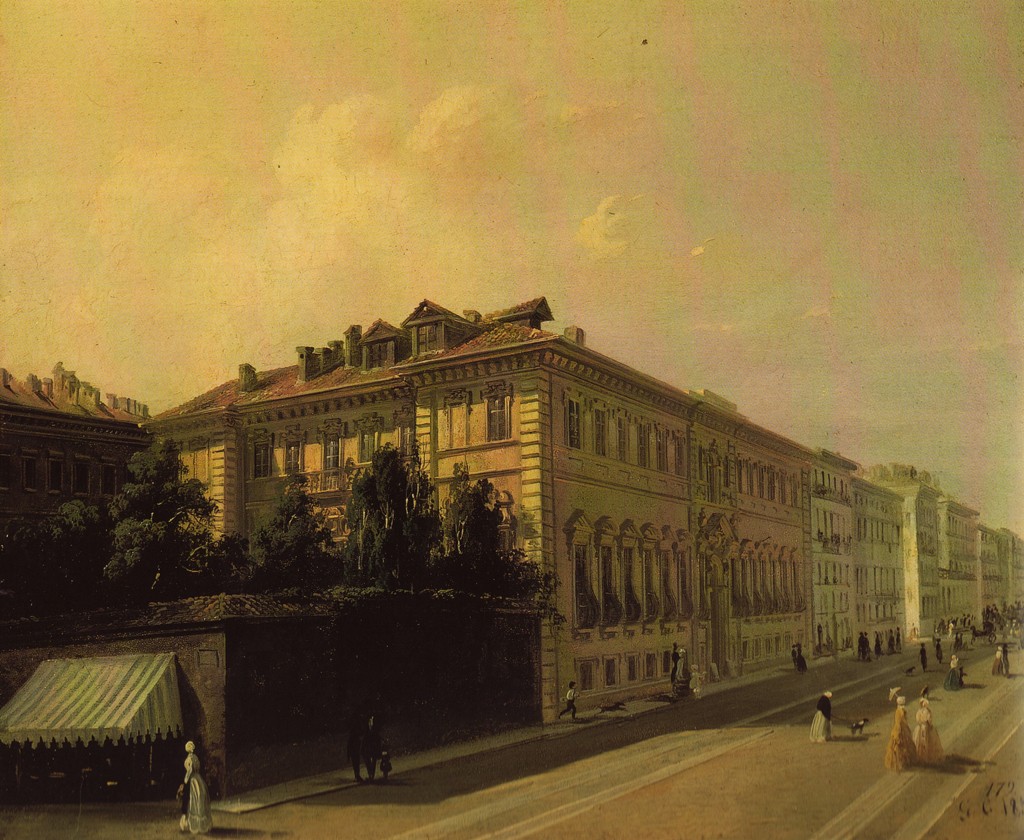
Palazzo d’Azeglio
Via Principe Amedeo 34 – Torino
Palazzo d’Azeglio is a historic building located in the centre of Turin, it has been the headquarters of the Turin Humanities Programme – THP – of Fondazione 1563 since 2021. Its history began in 1679, when it was built as part of the second expansion of the city. It was the residence of local noble families, including the Taparelli d’Azeglio, hence the name. Since 1970 it has housed the Luigi Einaudi Foundation, a national point of reference for the social sciences. The interiors and the decorations of the building feature a variety of architectural and decorative styles, which are the result of several refurbishments due to the various owners who have alternated over the course of more than three centuries.